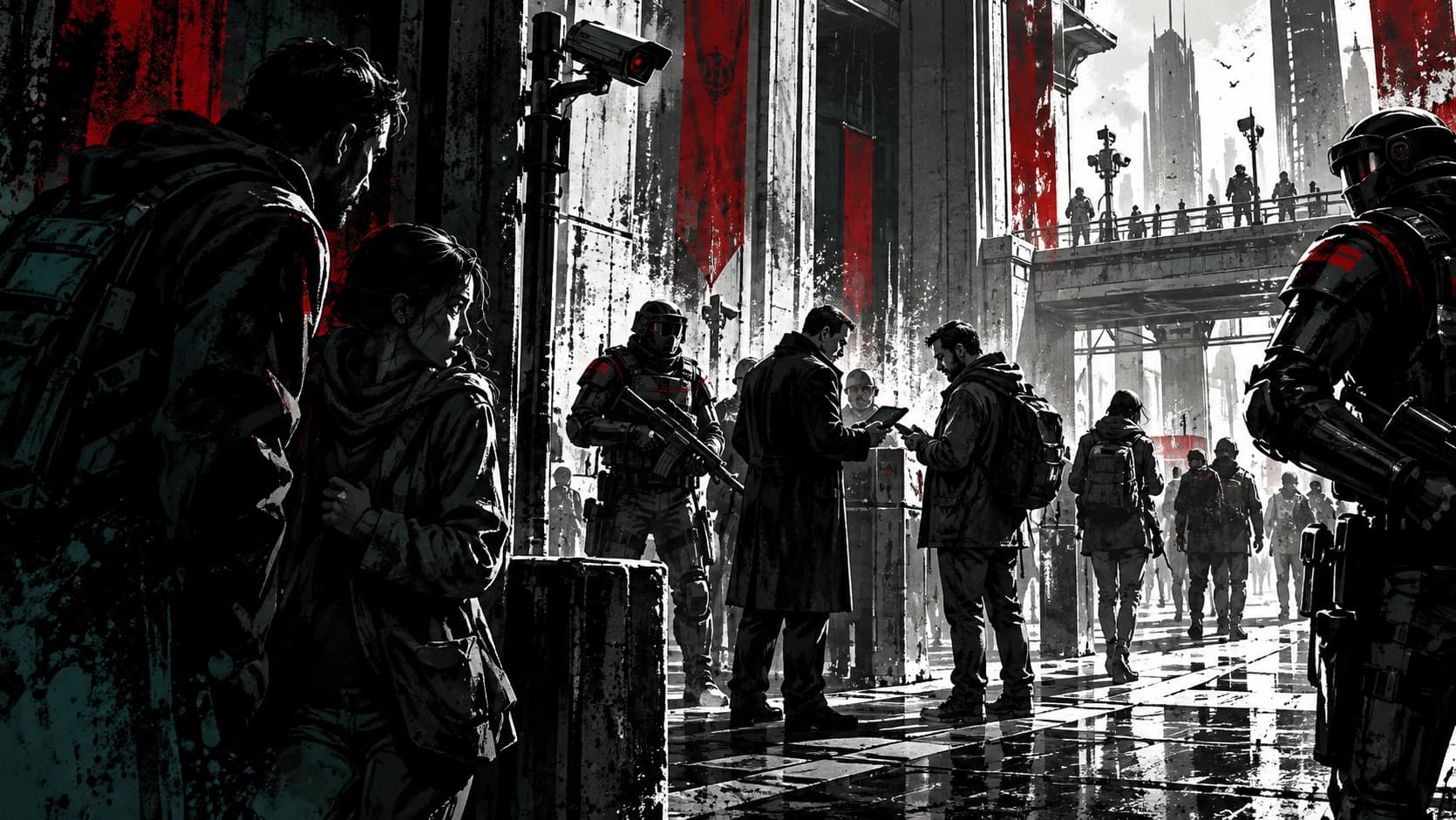
System Alert: Surveillance Active
Legacy of the Remnant
A CHRISTIAN DYSTOPIAN RPG OF EXCLUSION AND WITNESS.
The world has not collapsed. Food, infrastructure, commerce, and government still function — but access can be denied to anyone who refuses to comply. Build a community, endure scrutiny, and decide what faithfulness costs when compromise would make life easier.
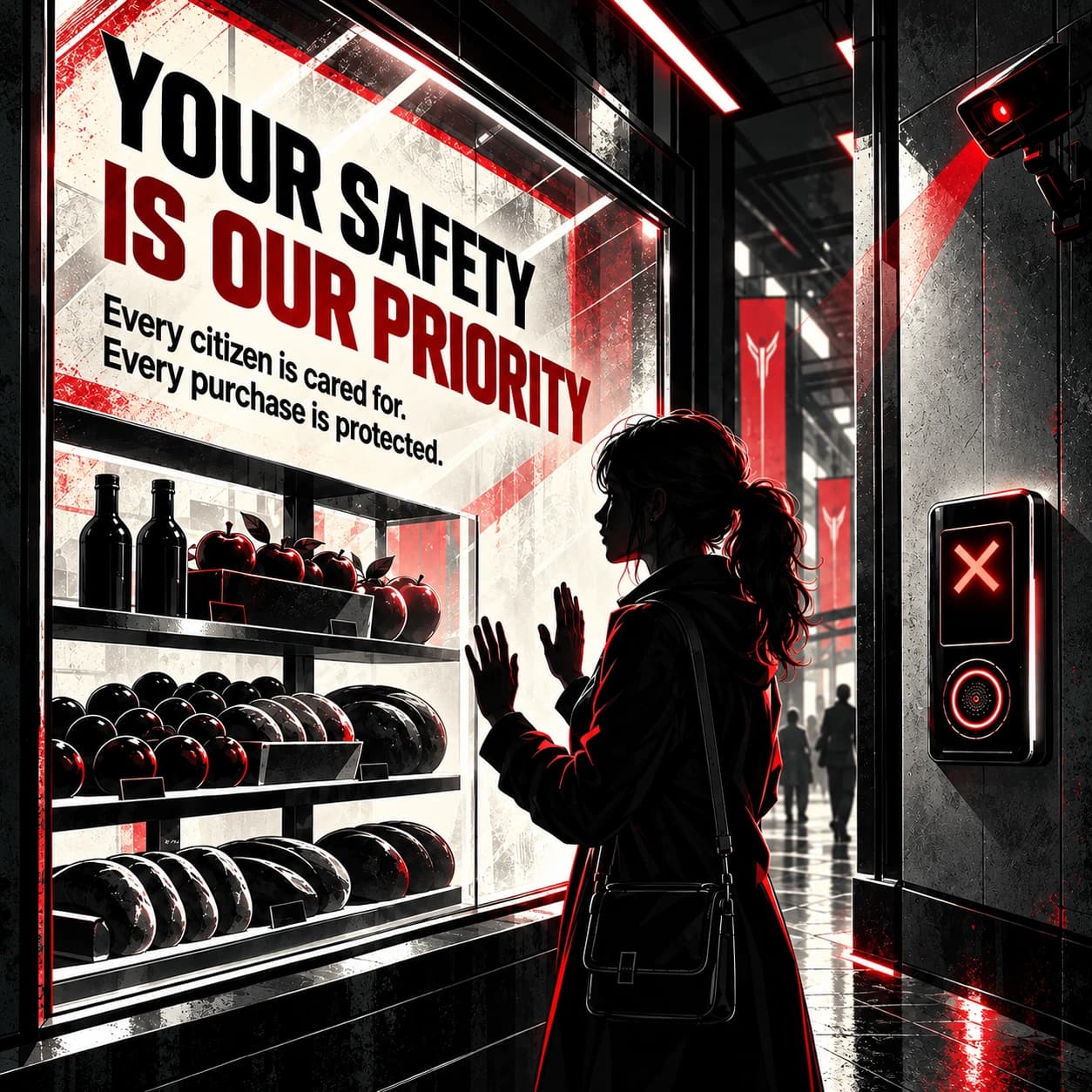
Exclusion protocol active
The world still works.Just not for you.
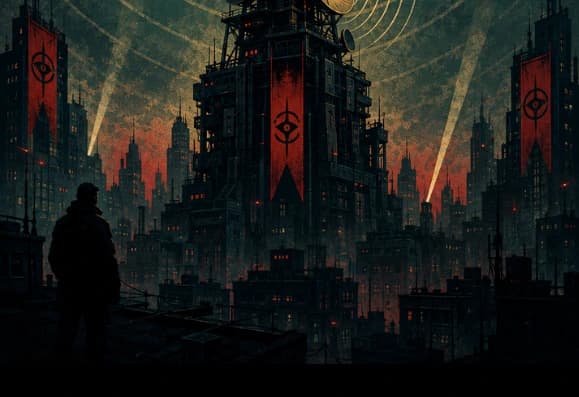
Civilization functions. Markets are open. Jobs are filled. Doors are unlocked for those who comply. But for the faithful, access can be restricted, monitored, or removed entirely. Legacy of the Remnant explores what it means to follow Christ when everyday life is built to reward compromise.
Abundance Still Exists
Food, housing, employment, transportation, and technology remain available.
Access Becomes Leverage
Accounts, employment, travel, and commerce can disappear when compliance is withheld.
Visibility Creates Pressure
Surveillance, reputation, and community connections make every decision harder to hide.
Faithfulness Has a Cost
The easiest path may preserve comfort while compromising conviction, witness, or community.

Integrity Engine™ Foundation
The core rules are shared.
Shared foundation. Different pressure.
Legacy of the Remnant builds its own campaign identity on the Integrity Engine.
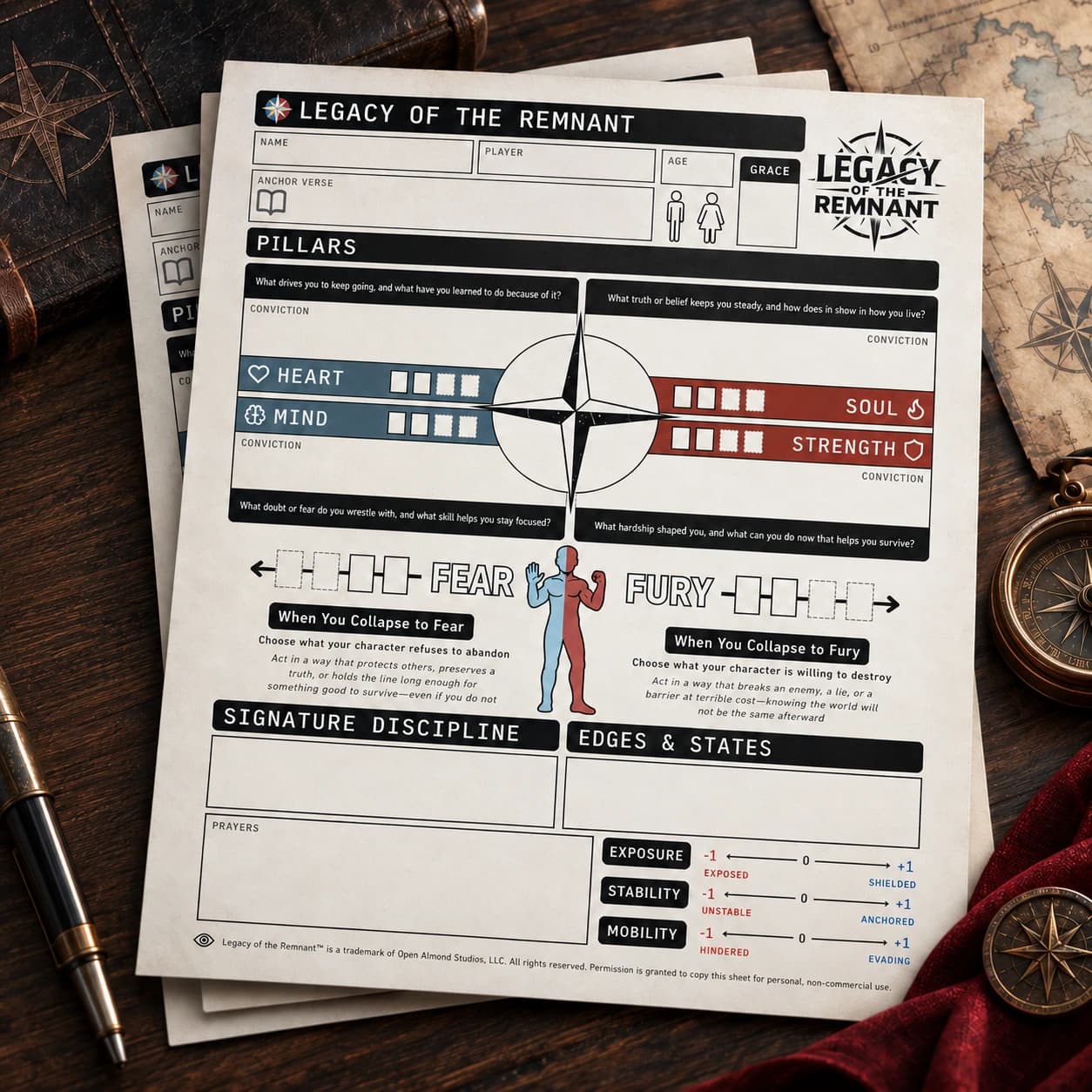
The shared 3d8 engine, four Pillars, Convictions, Pressure, and consequence-driven play remain underneath. Legacy of the Remnant strips away Skills and turns its attention toward Operators, Safehouses, Fear & Fury, Threat, and what a community carries forward.
Explore the Integrity Engine
Systems under strain
Ordinary people under extraordinary pressure.
Your Operator is a person before they are a collection of ratings. History establishes what they know, a Signature Discipline gives them something distinctly their own, and the consequences they carry can reach far beyond a single scene.
Your History Matters
Legacy of the Remnant has no Skill list. An Operator’s work, training, relationships, and lived experience establish what they know and what they can credibly attempt.
Signature Disciplines
Each Operator carries a focused capability rooted in training, instinct, preparation, relationship, or practiced faithfulness — something distinctly theirs.
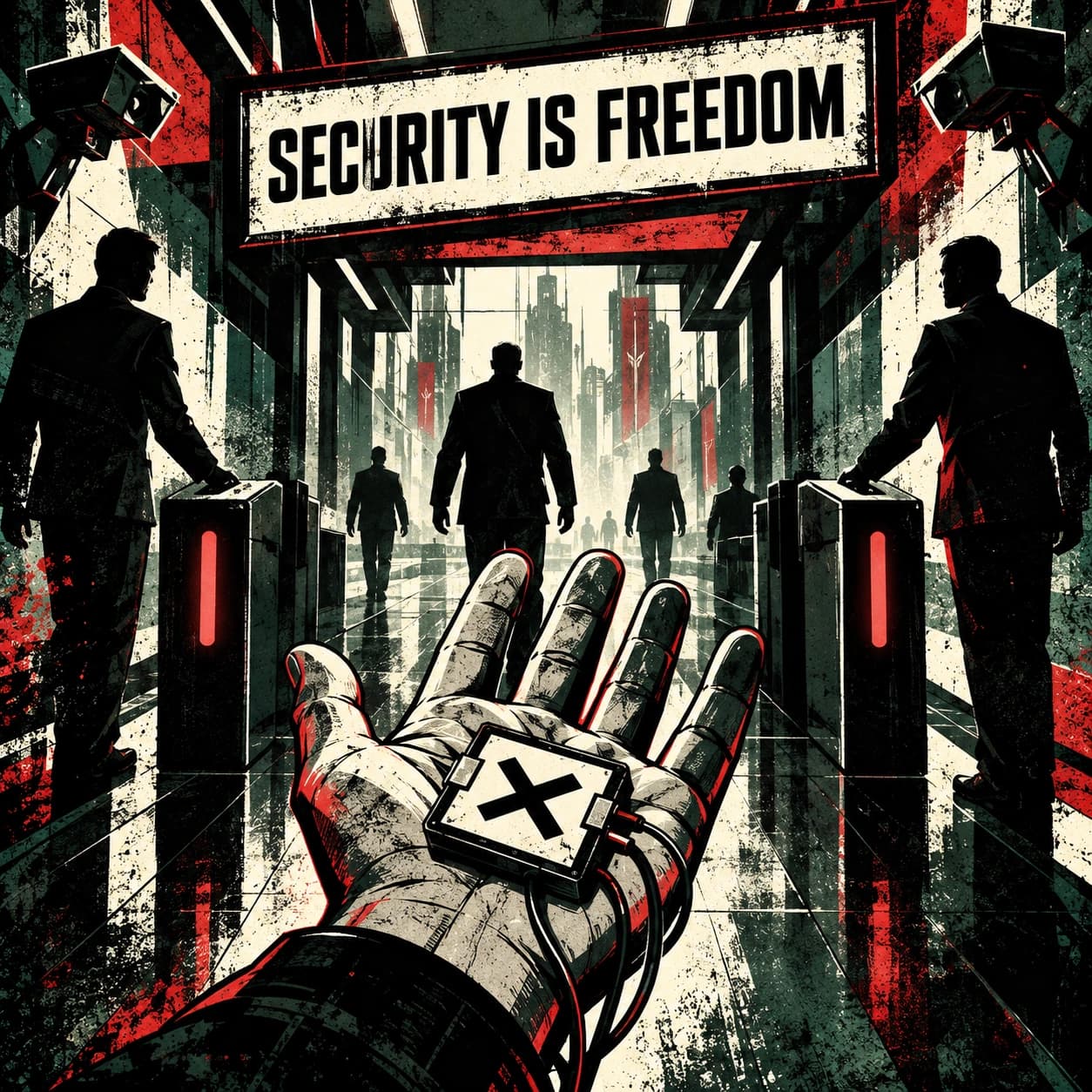
A Session Might Look Like...
Your safehouse learns that a medicine pickup has been flagged. Someone must enter monitored public space. A neighbor offers another route — but only if the group publicly complies with something they believe is wrong.
- Get the medicine.
- Protect the family.
- Lose the route.
- Increase scrutiny.
- Live with the decision.
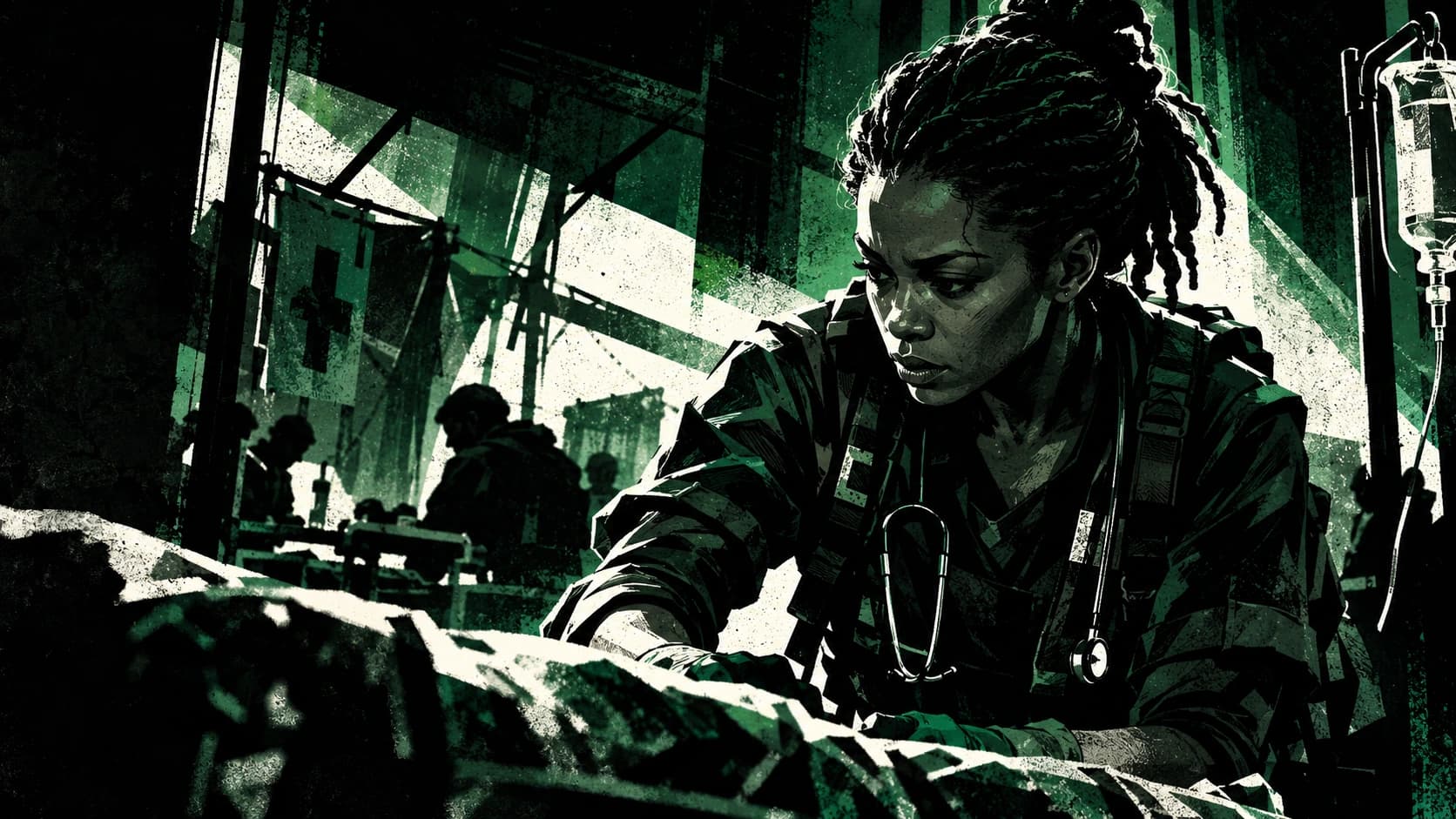
Operator in Practice
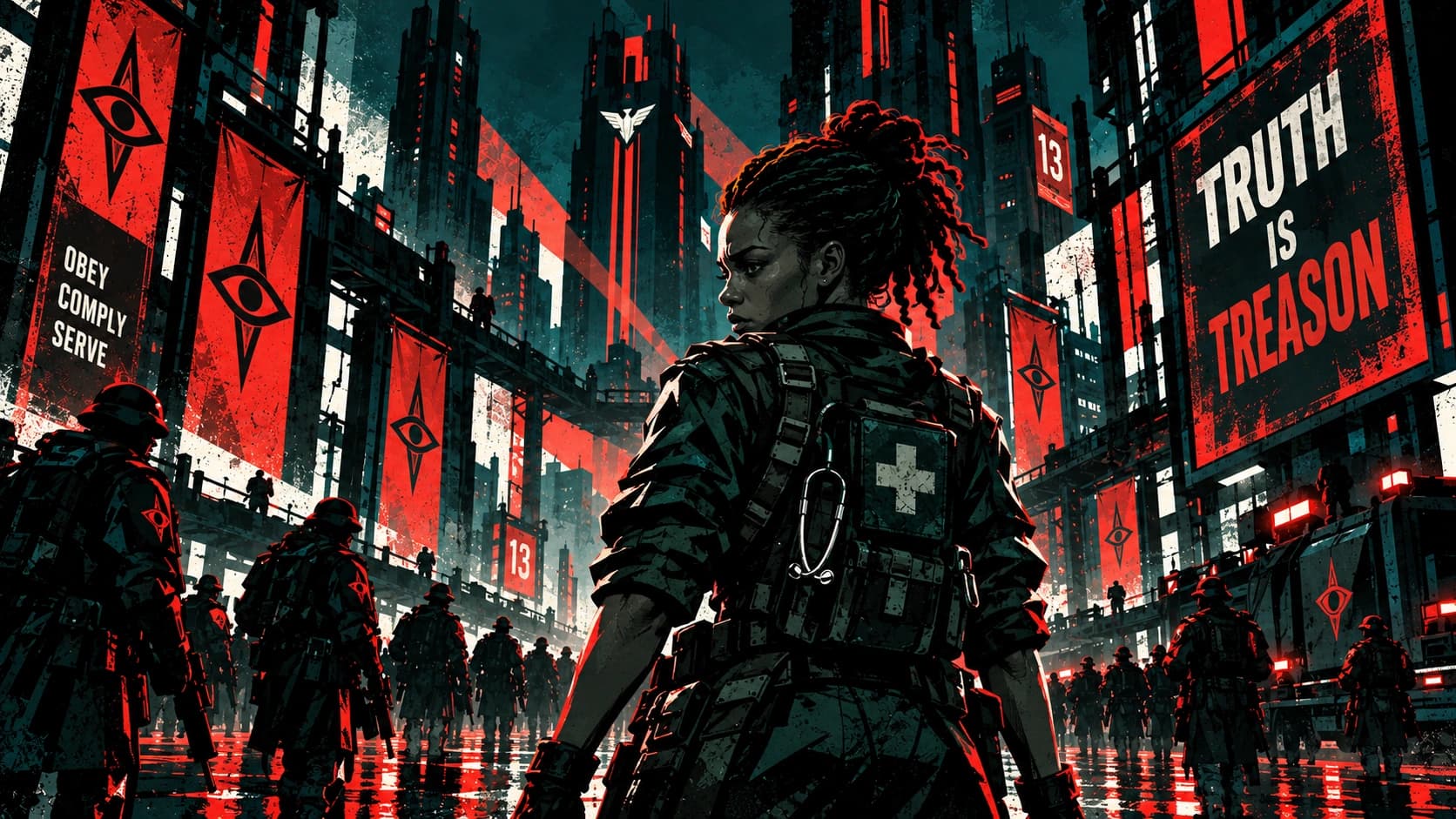
Miriam Okafor
Emergency nurse · Isaiah 41:10
Miriam notices pain before people admit it. Her history gives her real medical expertise; her character is defined just as much by what she refuses to believe about suffering and who deserves care.
Expertise
Emergency medicine
Triage, clinical procedure, common injuries, medications, and care priorities are part of who she is.
Signature Discipline
Field Triage
When danger does not allow a full recovery, Miriam can stabilize someone and help them endure what comes next.
Conviction
No one is disposable.
“No suffering person is disposable before God.” That belief matters most when acting on it becomes costly.
At the Table
Miriam’s expertise tells you what she can recognize and attempt. Field Triage shows what makes her distinctive under pressure. Her Conviction tells you what she will not make disposable just because the easier choice would cost less.
Fear · Fury · Martyrdom
Some pressure follows you home.
Ordinary Pressure can pass when the danger is over. Fear and Fury represent the consequences that linger — what persecution, grief, anger, exhaustion, pain, and moral injury may leave behind without telling the player what their Operator must believe or become.
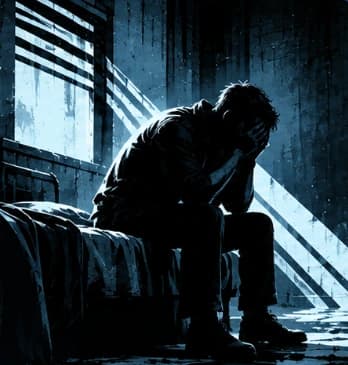
Fear
What are you afraid you may lose?
Fear can hold dread, grief, alienation, fractured trust, fixation, mental exhaustion, or trauma. It does not mean the Operator has stopped trusting God. It records that what happened mattered enough to leave a mark.
Heart + Mind pressure can overflow here
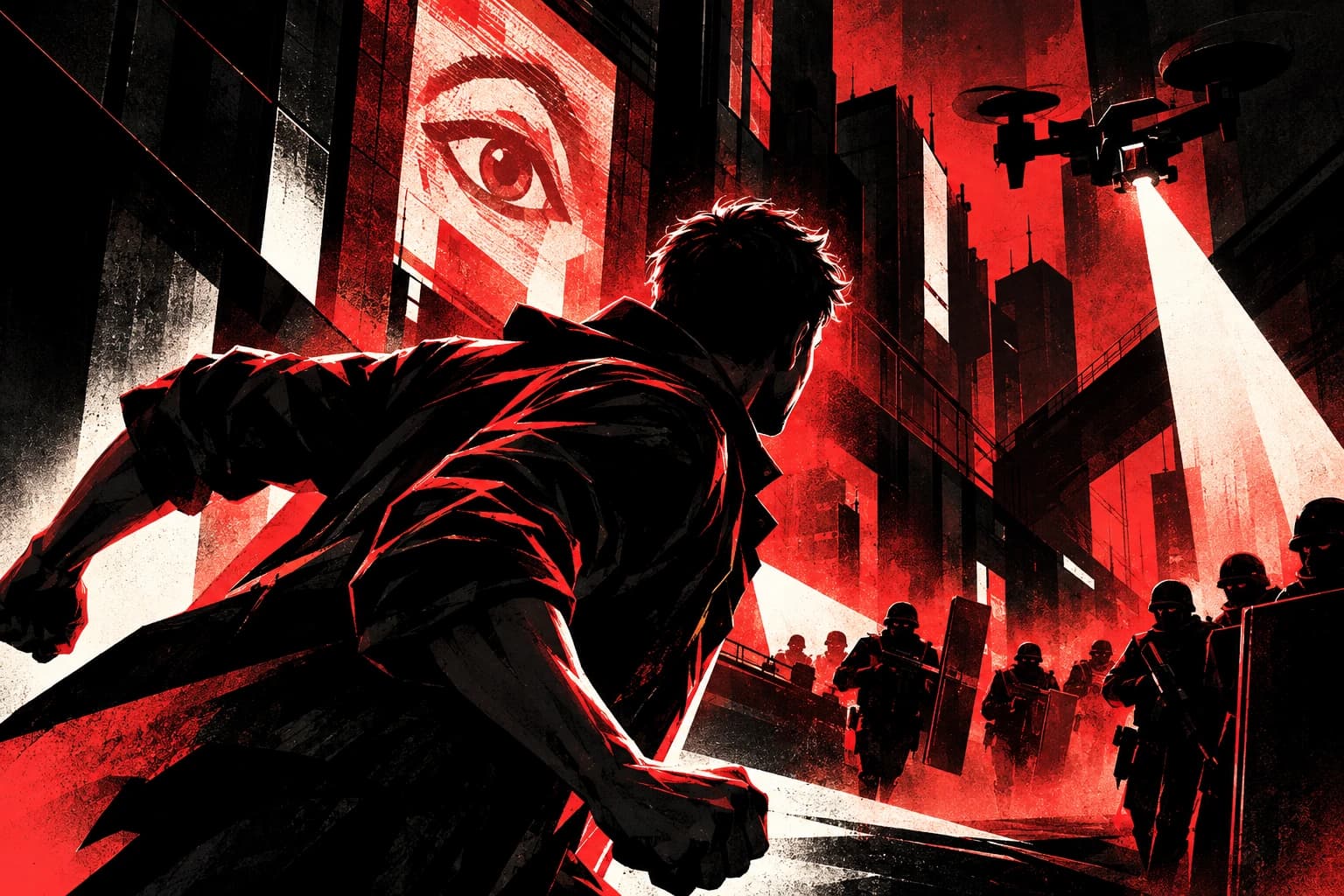
Fury
What will pressure tempt you to become?
Fury can hold anger, bitterness, moral injury, bodily trauma, exhaustion, pain, or spiritual strain. It does not tell the player whom their Operator hates or whether they forgive. The response still belongs to the player.
Soul + Strength pressure can overflow here
When pressure reaches the breaking point
Collapse does not take away the final choice.
One Last Act.
An Operator who reaches Collapse receives one Last Act. Through Fear, they choose what they refuse to abandon — a person, truth, rescue, warning, witness, route, or responsibility. Through Fury, they choose what source of oppression they are willing to break. Martyrdom is never presented as a reward for seeking death; the game turns its attention to the witness and legacy carried forward afterward.
The Church in hiding
The Safehouse is more than a place to hide.
A Safehouse is the network of people, preparation, trust, supplies, routes, Scripture, local knowledge, and shared practice that lets the Remnant wake up and keep serving tomorrow. The campaign grows the community, not just the individual.
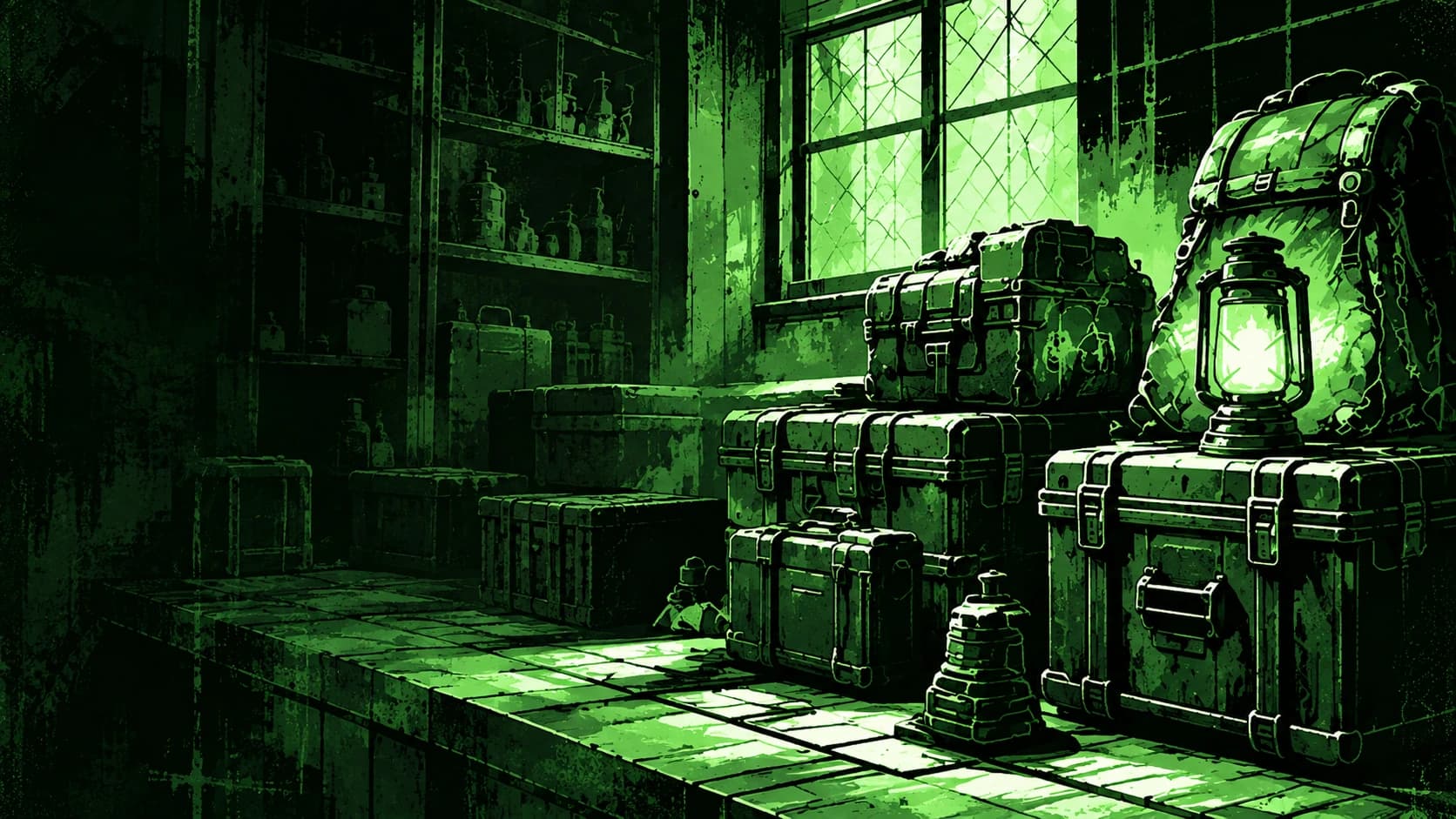
Resources
Supplies, tools, logistics, transportation, access, preparation, and practical leverage.
Security
Protection, concealment, warning, escape, counter-surveillance, safe routes, and controlled access.
Unity
Trust, cooperation, shared burden, coordinated action, mutual protection, and responsibility to one another.
Hope
Encouragement, endurance, preserved conviction, courage under persecution, and refusal to let present darkness define what is true.
Operations can strengthen these Domains and open new communal Disciplines as the Safehouse grows. Starting examples include Right Tool, Right Time, Living Shield, One Voice, and Voice of Exhortation.
Operations & Threat
The regime notices.
Threat is not a punishment for playing well. A quiet failure may teach the regime nothing; a brilliant rescue may prove the Remnant is organized, capable, and impossible to ignore.
REGIME_ASSESSMENT
01
Attention
The Remnant has been noticed.
02
Coordination
Separate incidents begin to look like a pattern.
03
Force
The response becomes deliberate.
The world tightens around the Remnant.
THREAT_ESCALATION
regime response profile
L6Critical
Open suppression is active. Lethal force and mass enforcement are credible parts of the regime response.
L5Severe
Arrests, raids, coordinated surveillance, and systemic harassment intensify.
L4High
Restrictions, propaganda, intimidation, and directed enforcement increasingly shape events.
L3Elevated
Believers and suspected networks are being identified, compared, and singled out.
L2Guarded
Monitoring increases. Patterns and unusual activity are receiving attention.
L1Low
Quiet suspicion and baseline surveillance. The Remnant is not yet a priority.
Adversarial pressure
Not every threat carries a weapon.
Legacy of the Remnant pushes back through people, systems, places, and time. The Remnant may face an investigator, a locked transit network, a failing piece of infrastructure, or a closing window before a sweep begins.
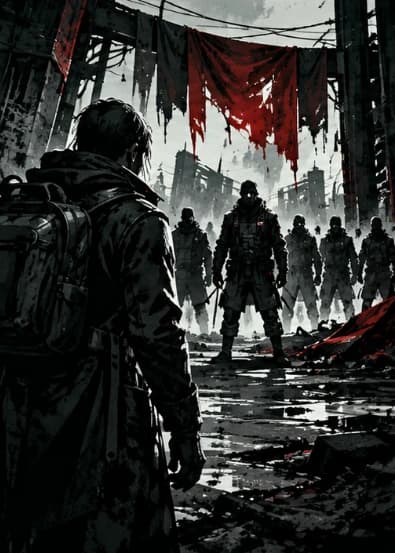
Opposition
People and groups who actively pursue objectives against the Remnant — authorities, investigators, enforcement teams, rivals, or frightened people with something to lose.
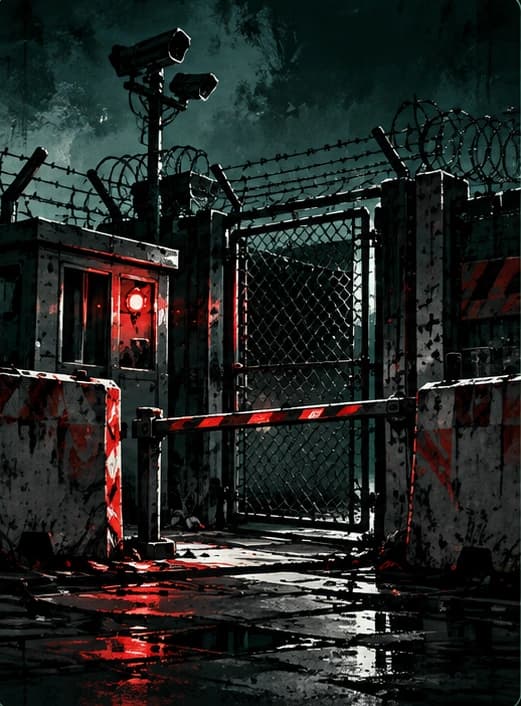
Obstructions
Checkpoints, access systems, bureaucracy, sealed routes, controlled infrastructure, and other barriers that resist without needing a villain behind every door.
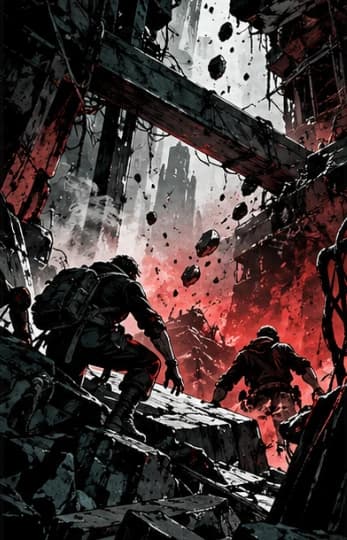
Hazards
Crowd surges, failing infrastructure, exposure, automated danger, or another active process that becomes worse if nobody acts.
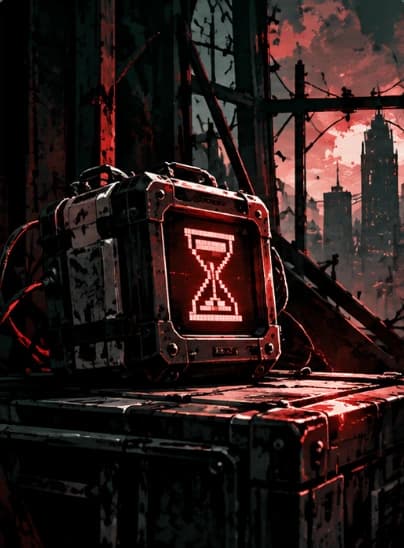
Countdowns
Sweeps, audits, closures, raids, expiring windows, and other clocks that change the situation when time runs out.
Current development
Legacy of the Remnant is in active development.
The core game is being written and actively playtested now. Try Operations, Threat, Fear & Fury, Safehouse growth, and difficult choices at the table — or follow development as the full line takes shape.
They overcame him because of the Lamb’s blood, and because of the word of their testimony. They didn’t love their life, even to death.
Explore the Legacy of the Remnant Line
Explore the Legacy of the Remnant Line
Connected across the line
Legacy of the Remnant shares its system foundation with Integrity Engine and already pairs naturally with Hall of Faith Hero Deck™ for groups that want more Acts of Faith and faithful witness at the table.


Legacy of the Remnant FAQ